Diabetes and the Kidneys
The kidneys filter waste products from the body and pass them out in the urine. This gets rid of toxins and regulates the amount of water in the body.
If blood glucose levels have been persistently high over many years, the kidney's filters may become damaged. The damage means that protein can leak out in the urine but, at the same time, the kidneys are not as efficient at removing waste products from the body.
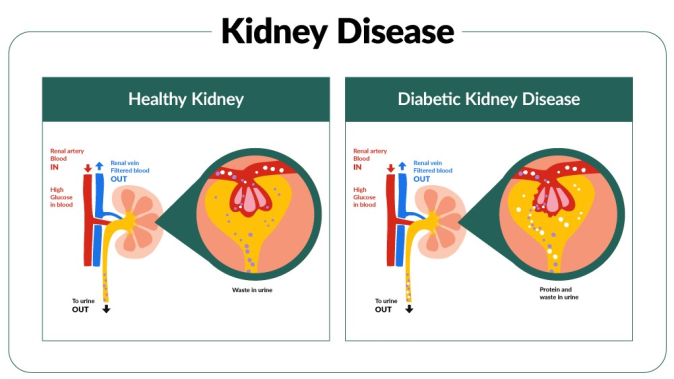
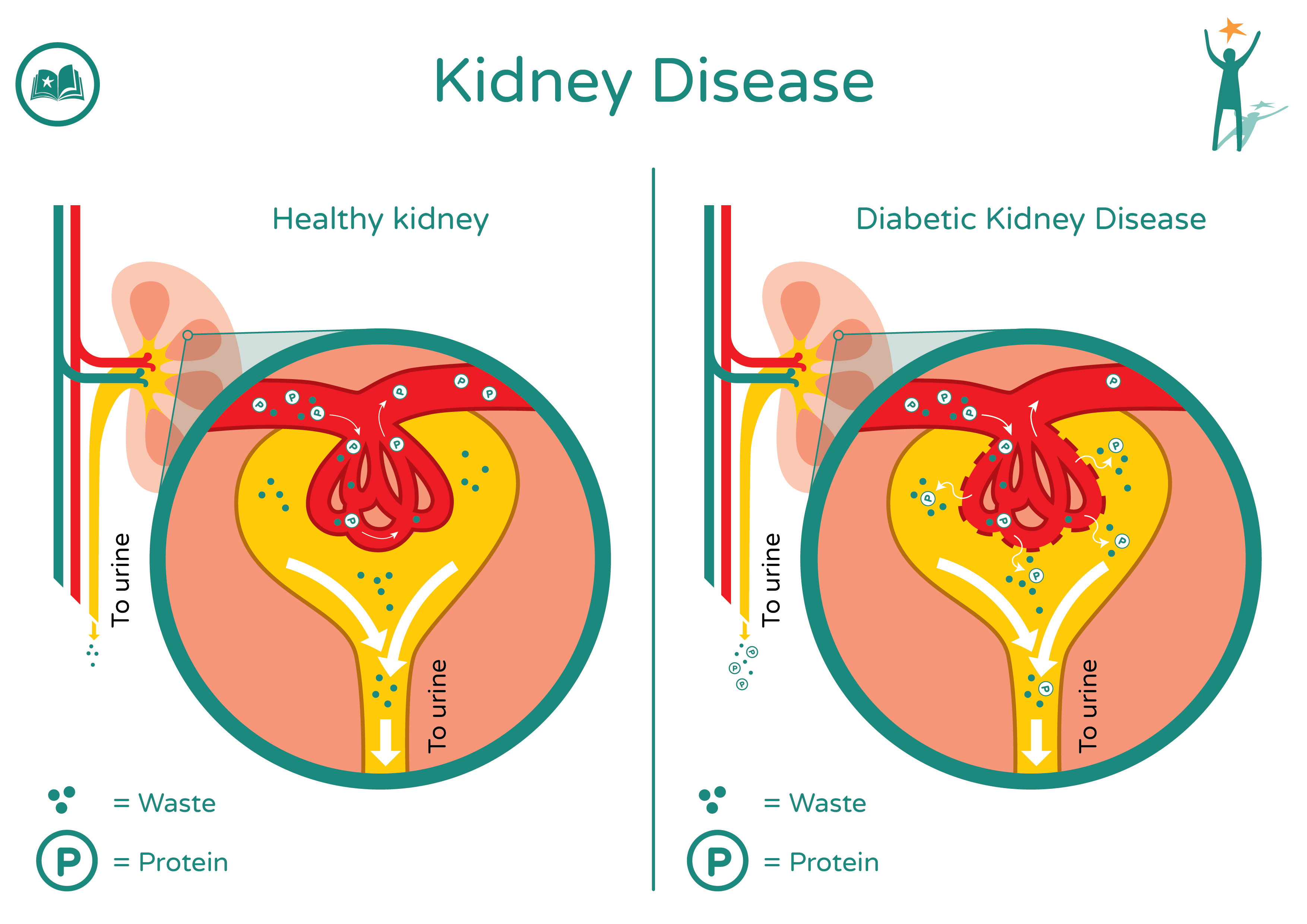
When the small blood vessels in the kidney are damaged by high blood glucose this is known as ‘diabetic nephropathy’. Other factors contributing to the damage are high blood pressure, smoking and cholesterol.
Tests to assess kidney function
Urine test: An early morning sample of urine is best. Urine usually contains only small amounts of protein. If there are changes in kidney function due to diabetes, more protein will be passed in the urine.
Blood test: This measures how well the body is filtering out waste products. The usual tests for this are (1) estimated Glomerular Filtration Rate (eGFR) and (2) creatinine level.
Blood pressure test: If your kidneys are already damaged it is important to maintain your blood pressure at normal levels, as high blood pressure can make kidney damage worse, which in turn will increase your blood pressure. It may be helpful for you to monitor your own blood pressure so that you can act quickly on any changes.
Screening and monitoring
In the diabetes clinic, you will be screened regularly (at least once a year) to pick up the early stages of diabetic kidney disease. This will be done through the urine and blood tests explained above. If kidney damage is found, you will be given advice and treatment to protect the kidneys and prevent the damage from getting worse.
Treatment
A slight increase in protein in your urine may be reversible by maintaining good blood glucose levels and normal blood pressure. Your doctor may also prescribe a type of medication called an ACE inhibitor (e.g. Ramipril, Captopril, Enalapril) or an ARB (e.g. Valsartan, Candesartan, Irbesartan, Losartan) which can also slow down the process.
If you have type 2 diabetes, you may also be commenced on Dapagliflozin or Empagliflozin. These are medications used to treat diabetes. They are Sodium-glucose co-transporter-2 or SGLT2 inhibitors. The SGLT-2 inhibitors lower blood glucose. Recent research has shown that these medications can also protect the kidneys and that this is separate from their effect on blood glucose levels. For some people with diabetes and kidney disease, SGLT-2 inhibitors are used only to protect the kidneys and not for blood sugar lowering.
In addition, some people with type 2 diabetes are given a medication called Finerenone. This helps reduce inflammation and scarring in the kidneys. It is generally used in addition to the other medications mentioned above.
In a small number of cases, kidney function can deteriorate. Dialysis may be necessary and a kidney transplant may have to be considered.
Additional Resources
For further information, have a look at Diabetes UK page on diabetes and kidneys.