Eating Well on GLP-1 agonists and Tirzepatide
If you are taking GLP-1 agonist medication or tirzepatide (Mounjaro) to lose weight, it’s important to eat the right things so that
- you lose weight successfully
- you lose mainly fat rather than muscle
Watching the size of your portions, eating balanced meals, and having enough protein will help you achieve those goals.
Making these changes small, practical and everyday can help make those healthy habits stick.
Healthy Eating Principles when taking GLP-1 agonists / Tirzapetide (Mounjaro)
- Protein – to maintain muscle AND make you feel full
- Small, gentle meals spread across the day – to lose weight AND reduce nausea and bloating
- Balance of different foods - to keep blood glucose levels steady (especially for people with diabetes)
- Fluid – to stay hydrated
Let’s look at this in more detail:
What to Eat & How Much
1. Protein
Why?
- Make sure your muscles don’t lose strength
- Makes you feel full
- Reduces fatigue
How much?
- Aim for 20-30g per meal
- Include protein at every meal
What does that actually look like?
| Food | Portion | Protein |
| Chicken breast (grilled/baked) | Palm-size piece (120 g cooked) | 25–30 g |
| Fish (salmon, cod, haddock) | Palm-size fillet (120–140 g) | 22–28 g |
| Eggs | 3 medium eggs | 18–21 g |
| Greek yoghurt (0–2% fat) | 1 pot / 200 g | 18–20 g |
| Cottage cheese | ½ large tub (200 g) | 20–24 g |
| Lentils (cooked) | 6 tablespoons | 9–10 g |
| Chickpeas / beans | 6 tablespoons | 8–9 g |
Spread Across the Day e.g.
| Breakfast | Lunch | Dinner |
| Greek yoghurt (200 g) + berries → ~20 g protein
OR 2 eggs + 1 slice wholemeal toast → ~18 g protein |
Grilled chicken salad (palm-size chicken) → 25–30 g
OR Lentil soup (1 cup) + yoghurt → ~20 g |
Baked fish (palm-size) + vegetables → 22–28 g
OR Beans/lentils (6 tbsp) + egg → ~18–22 g |
2. Vegetables & Fibre
Why?
- Helps with digestion
- Reduces constipation
- Makes you feel full
How much?
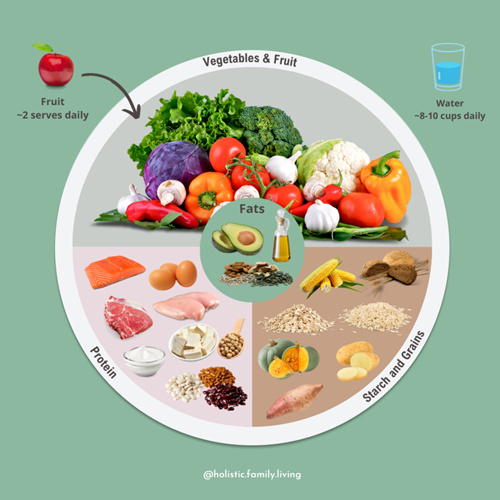
As much as you like across the day – there is no limit
What does that actually look like?
| Food | Suggested Portion |
| • Leafy salad (lettuce, spinach, rocket) • Tomatoes, cucumber, peppers |
½ plate vegetables at lunch & dinner |
| • Pulses (lentils, chickpeas, beans) | Palm-size fillet (120–140 g) |
3. Starchy/ Wholegrain Carbohydrates
Why?
- Stop you feeling sick
- Reduce indigestion / acid reflux
- Keep up your energy and reduce fatigue
What are starchy carbohydrates?
Foods such as pasta, rice, potato, bread, chapatis and plantains are all starchy carbohydrates.
Starchy foods break down slowly in your body, so they don’t raise your blood sugar as much as sweet foods and drinks like sweets, chocolate, fizzy drinks, and sugar.
How much?
- About 1/3 of your plate (noting too much carbohydrate will contribute to weight gain)
- Focus on starchy carbohydrate, especially wholegrain and avoid ‘sugary/ sweet’ foods to avoid blood sugar spikes
- 3-4 portions a day of starchy carbohydrate
- potatoes, bread, rice, pasta, and cereals
- Wholegrain varieties add fibre:
- smoothing blood glucose further (especially for people with diabetes)
- keeping your bowels healthy
- helping you feel full
- Lighter meals later in the day
What does that actually look like?
| Food | Suggested Portion |
| Wholemeal bread | 1 slice |
| Porridge oats (dry) | 4 tablespoons |
| Brown rice / quinoa | <½ cup cooked |
| Wholewheat pasta | ½ cup cooked |
| New potatoes | 2 small |
| Sweet potato | ½ medium |
4. Healthy Fats in small amounts
What are healthy fats?
Healthy fats are fats that we need for the body to work properly. Examples of healthy fats are:
- Oils – olive oil, rapeseed oil, sunflower oil, corn oils
- Nuts
- Avocado
- Oily fish (eg salmon, sardines, trout, mackerel)
- Butter, lard, ghee, coconut oil
- Red meat, processed meat
- Biscuits, cakes, pastries, deep fried food
- Healthy fats help reduce heart disease
- High amounts of fat in meals worsens nausea & indigestion
- All fat, even healthy fats, are high in calories
What does that look like?
| Food | Suggested Portion |
| Olive/rapeseed oil | 1 teaspoon |
| Nuts | Small handful (10–12) |
| Avocado | ¼ fruit |
Putting all of that together, your plate should look something like this:
Download our sample meal plans to see how to turn this into real meals
Top Tips to help you lose weight
 Don’t skip meals
- This might seem tempting, but eating small, balanced and nutritious meals regularly is more effective for losing weight than missing meals
 Snacking
- Only have a snack between meals if you’re physically hungry, not “head hungry”. Being “head hungry” is when you think about food and want to eat it even when you’re not physically hungry.
- If you are snacking, focus on healthy, nutrient-rich snacks such as fruits, vegetables and protein.
 Mindful eating
- Mindful eating is paying full attention to your food while you eat. If you eat while distracted by something else, such as the TV or your phone, it can be hard for your brain to know that you’ve eaten. You might feel less satisfied and get hungry again more quickly.
 Physical activity
- Combining medication with balanced eating and regular movement will really help. This does not have to mean going to the gym, running or sports; any activity that makes you feel a bit hot and sweaty counts (eg walking, gardening, shopping, housework)
Remember: You don’t need to lose weight quickly. Building long term, sustainable habits is far more effective for both losing weight and keeping it off.
Managing side effects with diet
GLP-1 agonist medications and tirzepatide (Mounjaro) can cause side effects, especially when you first start treatment or when your dose increases. These are usually mild and often settle over time.
This section explains some common side effects and offers practical food and lifestyle strategies to help you manage them comfortably while continuing your treatment.
Symptom Food strategy
Nausea
- Eat slowly
- Eat small, frequent meals
- Choose bland, low-fat, easy-to-digest foods such as crackers, toast or[KC9.1][KC9.2][AB9.3] breadsticks(see below for foods that can help with nausea.
Indigestion / Heartburn / Reflux
- Eat smaller, more frequent meals
- Try not to lie down right after eating
- Avoid foods that commonly trigger reflux such as spicy, fatty, acidic, caffeinated or fizzy drinks
Diarrhoea
- Drink lots of low-calorie fluids (2 litres throughout the day) to stay hydrated
- Eat small meals more frequently
Constipation
- Aim for 25–35 g fibre per day, gradually increasing. Include a mix of soft, gel-like fibre (helps soften stools, e.g., oats, apples, beans) and rough, bulk-forming fibre (helps move stools along, e.g., whole grains, vegetables, nuts).
- Drink 2 litres of water or low-calorie drinks throughout the day
- Include fibre-rich fruits like prunes, kiwi and berries
- Do gentle physical activity like walking or stretching
Fatigue/Low energy
- Eat enough protein each day
- Drink at least 2 litres of water or low-calorie drinks throughout the day
- Choose nutrient-dense foods in smaller meals or try smoothies with protein & complex carbohydratess (like oats, fruit or yoghurt)